OrgControl is a whole working day as the VP, Strategic Alignment: meetings you were not briefed for, an all-hands panel with the whole company watching, a post a day for the
algorithm, coffee, gossip, and HR. Everyone has a view of you. Your job is to make it a good one while contributing nothing.
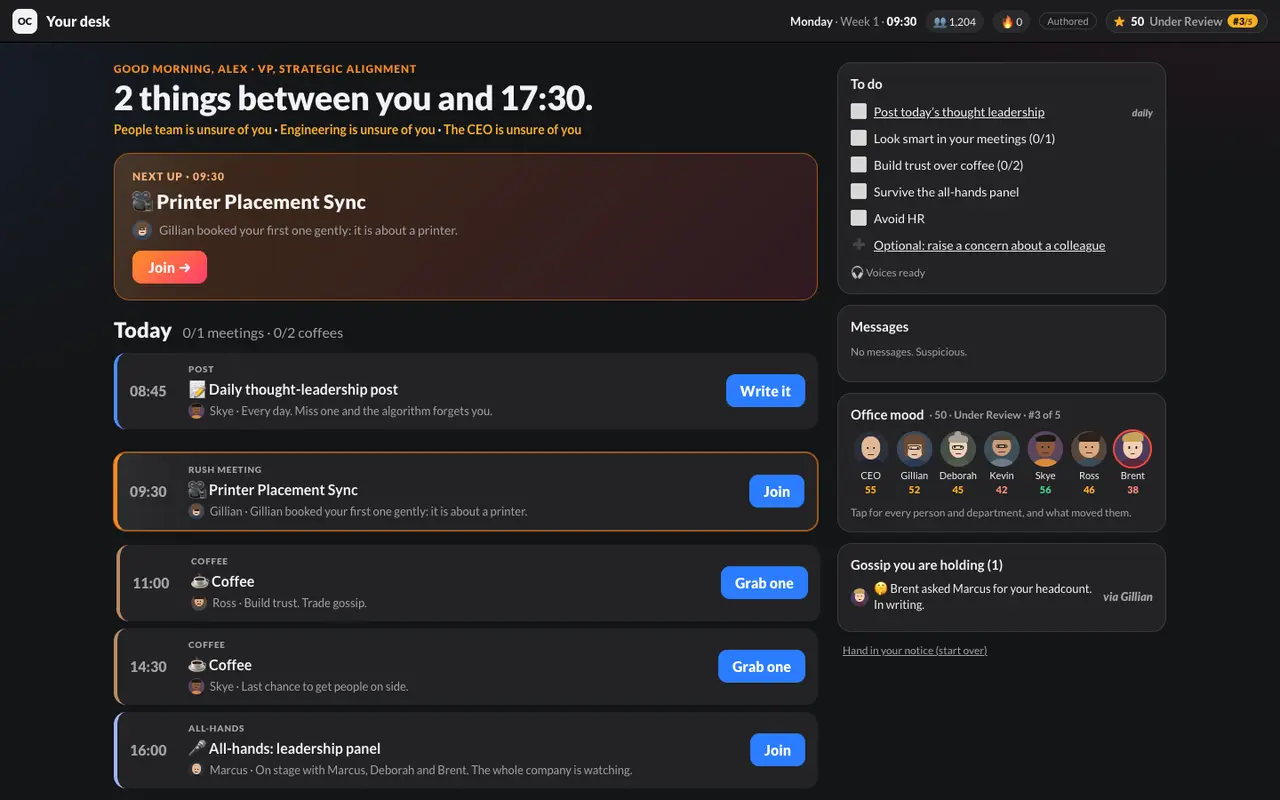
Sound on, on a laptop or your phone. Start at your desk with the day’s calendar, or walk the office floor. Badge in with LinkedIn and your week is saved to you, one workday a day.
orgcontrol.ai · Your desk
🚨 EMERGENCY all-hands · Join NOW
★ 50 Under Review #3/5
A typical Monday. It will not stay typical.
08:45📝 Thought-leadership post
09:30🎥 A meeting you were not briefed for
11:00☕ Coffee with whoever is at the machine
NOW🚨 EMERGENCY all-hands: “a quick update”
13:30🎥 Brent’s meeting (you are optional)
NOW🧑⚖️ Skye (HR): “quick chat? 🙂”
16:00🎤 All-hands: leadership panel
17:30🏠 Log off. See who still rates you.
09:00 · Your desk
The calendar runs your day
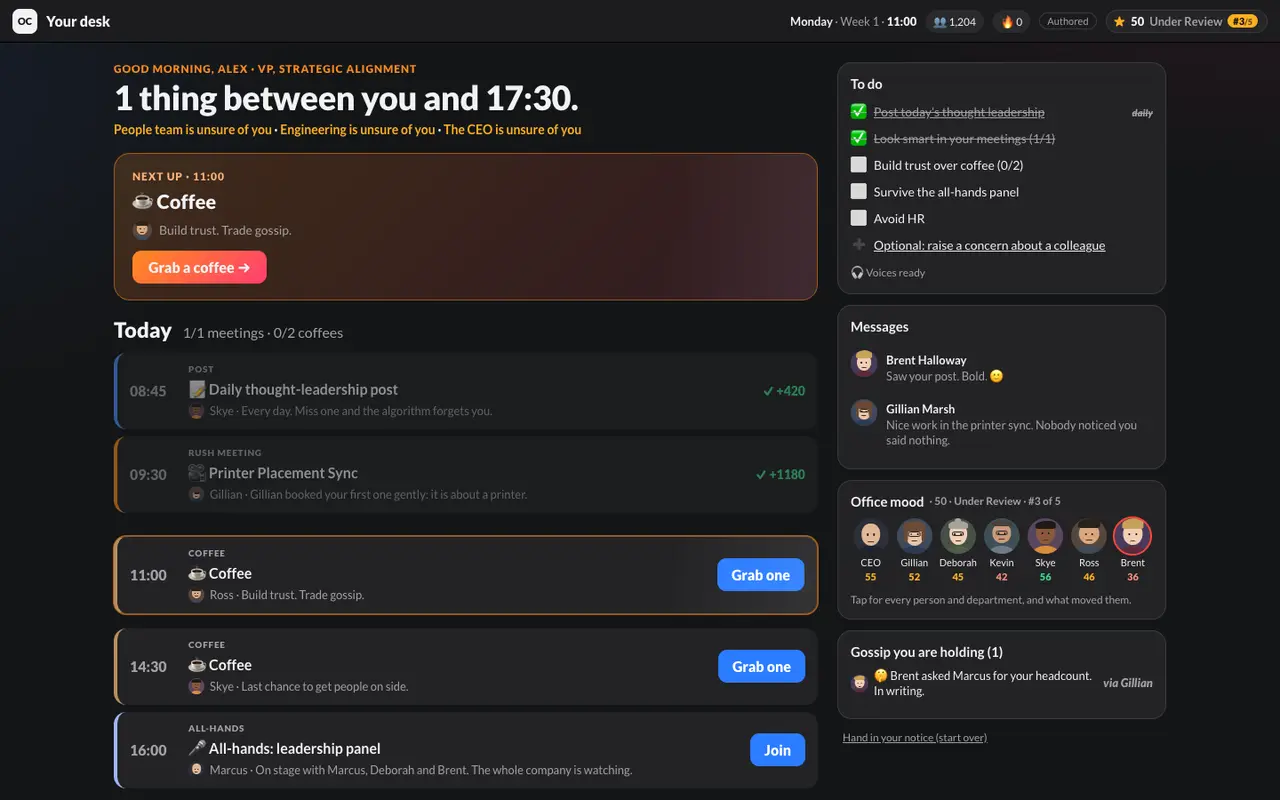
Monday to Friday, then the next week. Your desk has today’s calendar, a to-do list, messages from colleagues, the gossip you are holding and the office mood. Some things you can decline,
at a small cost with whoever sent them. Some things just drop in, and everything else waits until you have dealt with them.
Log off at 17:30 for the damage report: who moved, and why.
Monday · Week 1 · 11:00
09:30 · The meeting
Look smart, contribute nothing
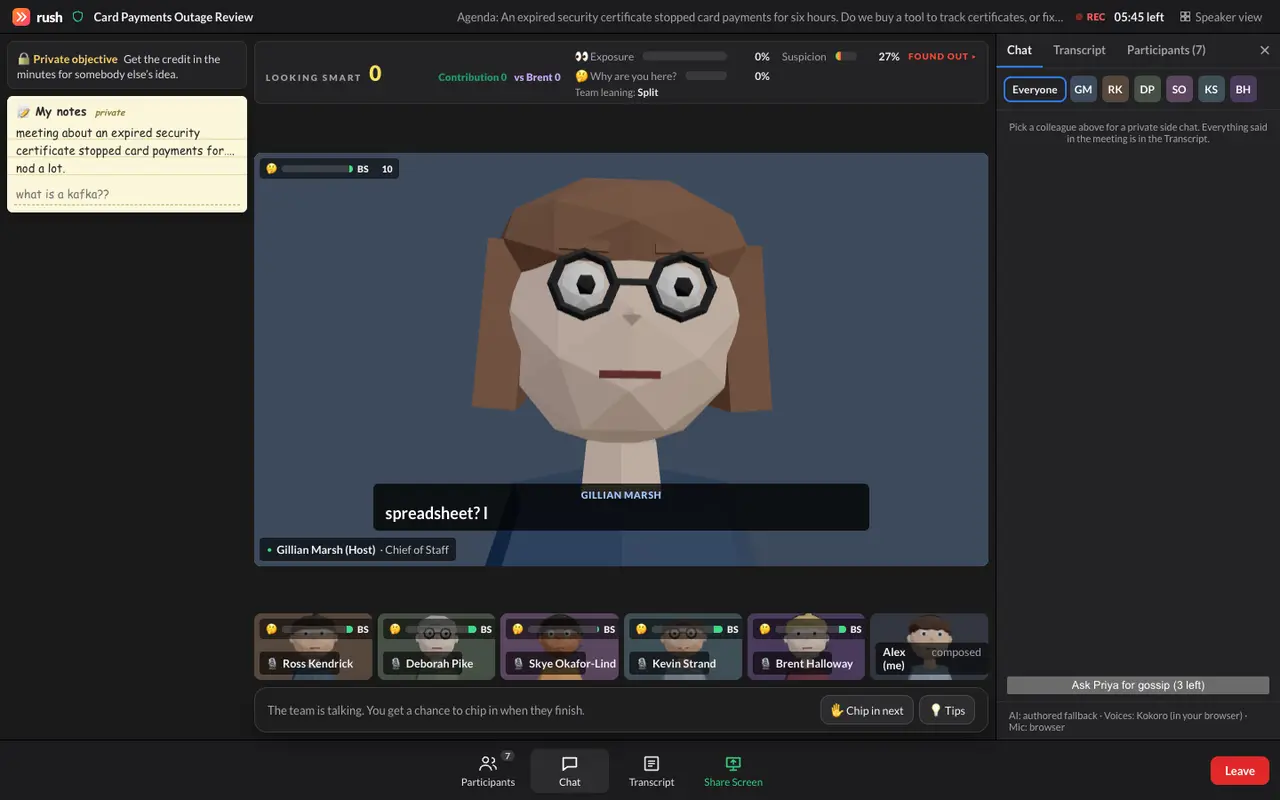
You chair it. You read the title. The team argues it out in rush, the video-call app that is definitely not anything you use at work, and now and then someone turns to you.
Answer with a question, park it offline, agree with whoever is winning. Real answers count against you. Every colleague has a BS meter; fill the room’s and you are found out.
When it ends, what the room privately thought of you becomes your standing with them.
Card Payments Outage Review · Rush
Live preview
rushWeekly Sync (Recurring)● REC
Gillian (host)
Deborah
Ross
Kevin
Gillian:
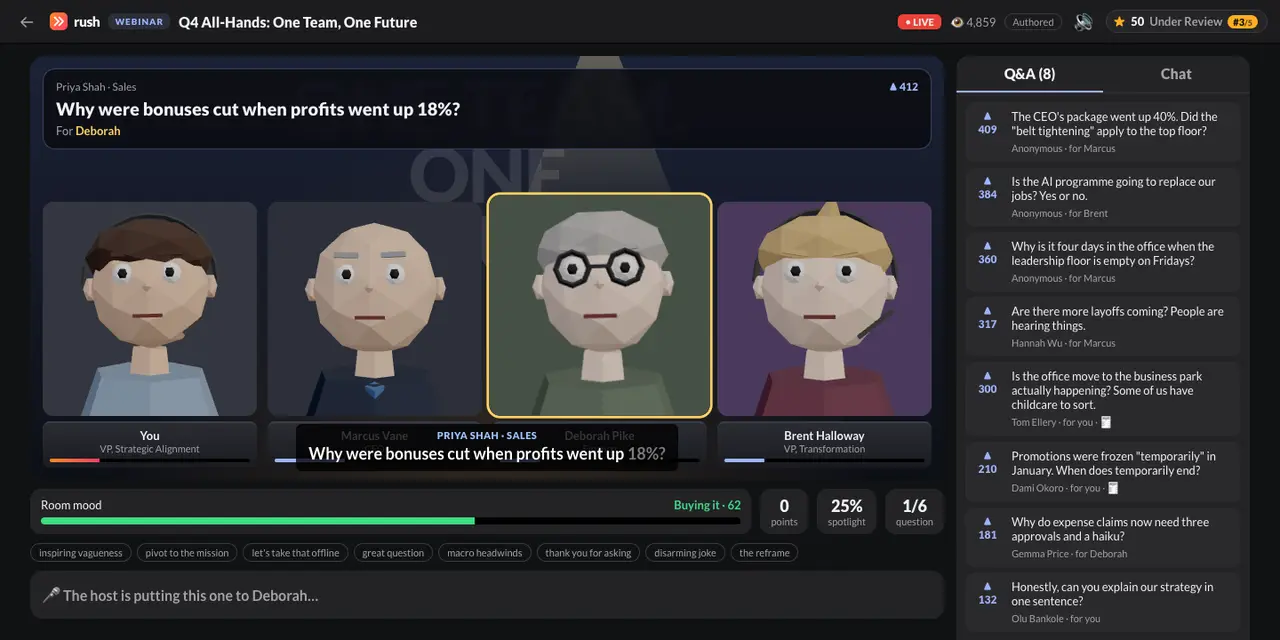
16:00 · All-hands
On stage. The whole company is watching.
A leadership panel with Marcus, Deborah and Brent, and 4,859 people asking why bonuses were cut. Deflect your questions or pass them down the panel. Cut in on theirs to steal the spotlight.
They bring receipts: things you said earlier. Repeat a dodge and the room gets restless. Let the mood hit zero and they walk out.
Sometimes it is an emergency all-hands. It rings. Attendance mandatory. Cameras on.
Q4 All-Hands: One Team, One Future
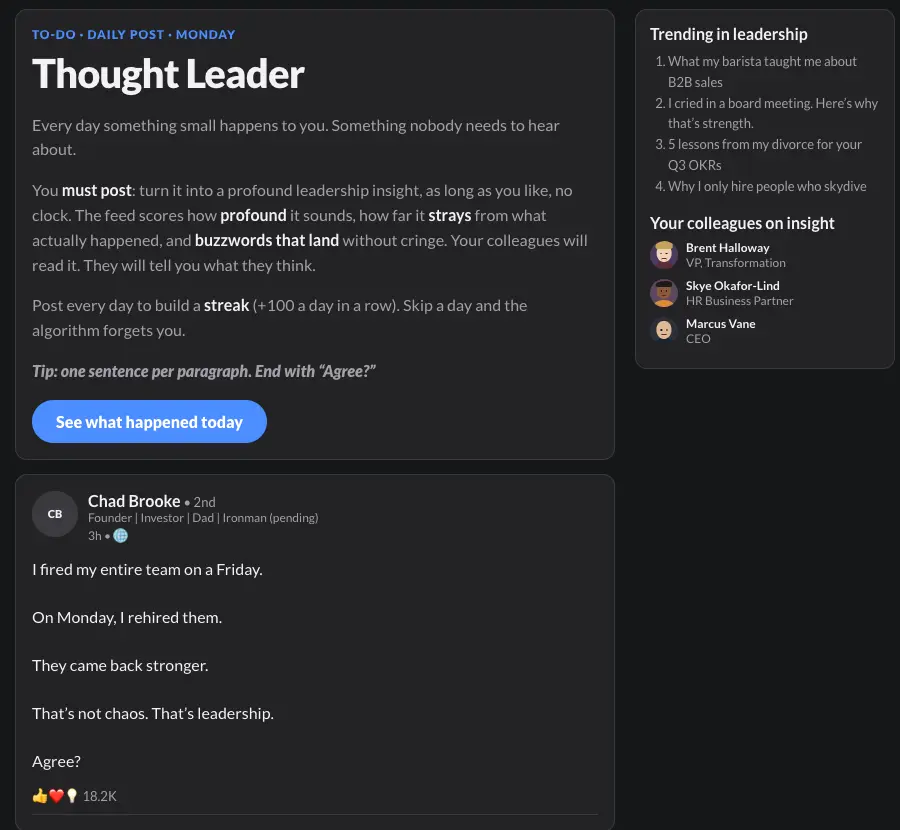
08:45 · Thought Leader
A post a day for the algorithm
Something small happens to you. Turn it into a profound leadership insight. The feed scores how profound it sounds and how far it strays from what happened. Then colleagues send voice notes about it.
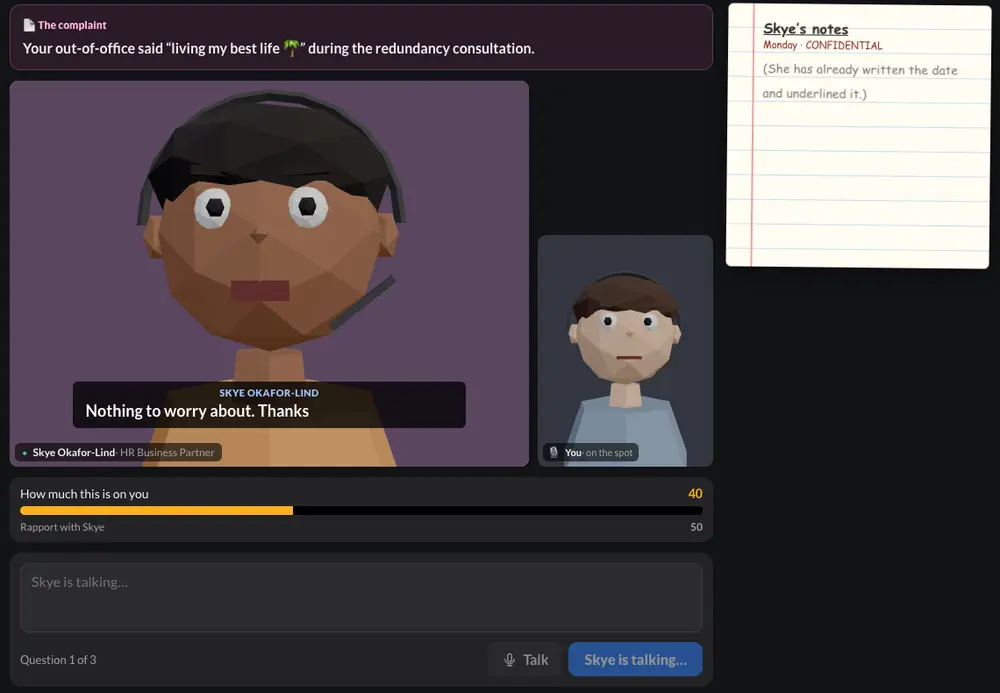
NOW · HR
“Quick chat? 🙂”
Defend yourself against a complaint: no admissions, no defensiveness, lots of “intent versus impact”. Or report a colleague. Gossip makes good evidence. Skye may ask who told you.
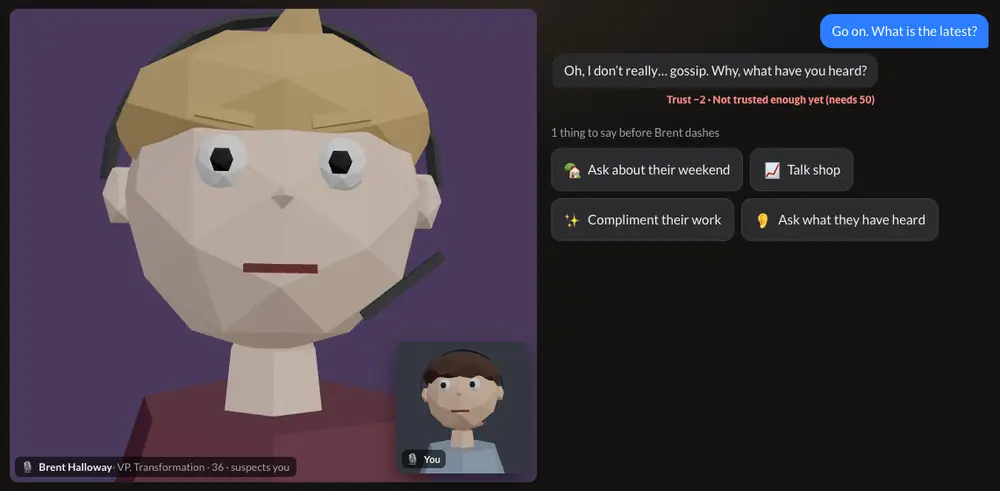
11:00 · Coffee
Coffee and gossip
Two exchanges with whoever is at the machine before they dash. Build trust, and people who trust you share gossip and take your hand-offs on stage gracefully. Brent does not trust you.
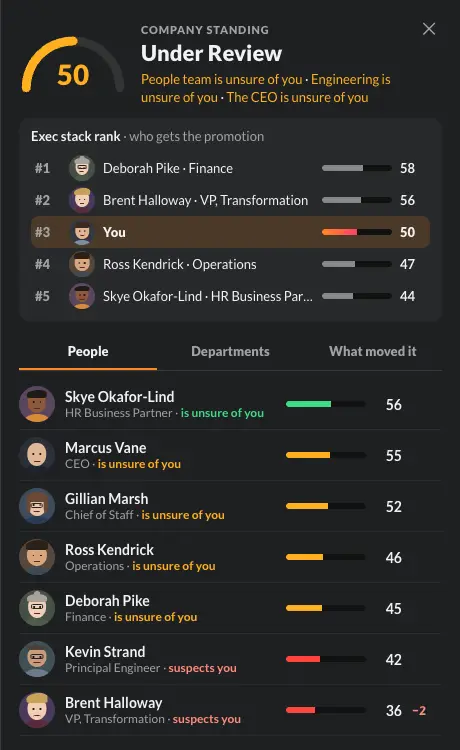
All day · Company standing
Everyone rates you. Out of 100.
The CEO, your Chief of Staff, Finance, Engineering, HR, Operations and the rival VP each rate you, and so does every department. Every game moves it, and a toast says what changed and why.
The exec stack rank decides who gets the promotion. You are third. Brent is second.
From “Under Review” upwards. It follows you into every meeting.
The office
Each has their own agenda, memory and voice, remembers what you claimed this morning, and rates you for it.
GM
Gillian Marsh
Chief of Staff
Your Chief of Staff. Books your day, chairs your meetings, minutes your walk-outs as “stepped away”. You owe her.
MV
Marcus Vane
Chief Executive
Your boss. Drops into meetings late and onto the all-hands stage early, wanting to know whose fault it is.
BH
Brent Halloway
VP, Transformation
The other VP. A fellow fraud with a podcast. Has asked Marcus for your headcount. In writing.
DP
Deborah Pike
Finance Lead
Remembers every number you say and checks it against the last one. Sits next to you on the panel. Sighs first.
SO
Skye Okafor-Lind
HR Business Partner
Your HR Business Partner. Wants a quick chat. There has been a complaint. About you.
KS
Kevin Strand
Principal Engineer
Reports to you. The only one who understands anything. Rates you 42 and is waiting.
“Deflected three questions at the all-hands and passed the fourth to Brent. Promoted by Thursday.” VP, Strategic Alignment
“Posted about my oat milk running out. 400 likes. HR called.” Thought Leader, insight
“Painfully accurate. I logged off and had to log on to a real one.” Everyone, eventually
Only got six minutes?
Skip the day and take one meeting: 20 of them, one agenda item each, none of which you were briefed for. Same room, same voices, nothing on your record.